
Volunteer Foundations | For ALL Volunteers
This section helps volunteers better understand the individuals we serve and how to support participants respectfully, safely, and effectively.
Who we serve
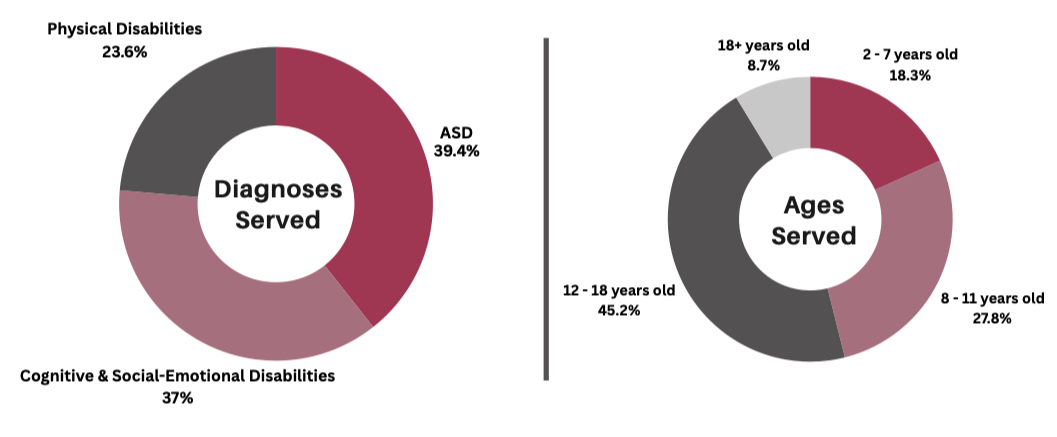
Hilltop Horizons serves individuals across the lifespan that can benefit from equine assisted services. Our most commonly served diagnosis is autism spectrum disorder, followed by a variety of other physical, social, cognitive, and/or emotional challenges. Below is a breakdown of populations we serve:
Person First and Identity First Language
The language we use when talking about disabilities reflects respect, dignity, and inclusion. Two common approaches you may hear are person-first language and identity-first language. Both are used in respectful ways, depending on individual preference and community norms.
Both person-first and identity-first language have value in our community. Because it centers the person first, Hilltop Horizons generally uses person-first language unless a participant or family indicates a different preference.
What Volunteers Should Do
Follow the language used by the participant, family, or instructor when preferences are shared
Default to person-first language if you are unsure
Avoid correcting others or debating language choices
Ask staff if you have questions about appropriate terminology
Using respectful language - of either approach - helps create an inclusive, supportive environment for all participants.
Wheelchair User Etiquette
Some participants use wheelchairs or other mobility devices. These devices are an extension of the person and support their independence. Volunteers should always ask before offering assistance, respect personal space, and follow instructor guidance when providing support. Thoughtful awareness and clear communication help ensure participants feel safe, respected, and in control.
Sensory Processing Disorder
Some participants experience the world differently through their senses. Sensory processing differences affect how individuals receive, interpret, and respond to sensory input such as sound, touch, movement, light, or smell. What may feel normal to one person can feel overwhelming or uncomfortable to another.
In equine-assisted services, being mindful of sensory needs - using calm voices, predictable movements, and minimizing strong smells or sudden noises - helps create a supportive and comfortable environment for participants.