


Group vs. Individual Therapeutic Riding Lessons
In general, therapeutic riding lessons can be taught in two formats - group or individual. Understanding the key differences between the two is important for determining the best type of lesson for each rider.
In general, therapeutic riding lessons can be taught in two formats - group or individual. Understanding the key differences between the two is important for determining the best type of lesson for each rider.
Group Lessons
I think there is often a perception that group lessons are simply designed to fit more lessons into one time frame. While we do strive to serve as many clients as possible, we would never do that at the expense of the quality of our service. Group lessons are both enriching and engaging to our riders, despite of (and often because of) sharing the lesson with another rider.
Riders are always placed in groups that the instructor believes will foster a healthy environment for growth and learning for all parties involved. Often this means the riders in a group will have similar goals and skill sets to succeed. Because of this, all riders are taught to their level and ability. Often times, each rider may even have different objectives in a lesson that are suited to their individual skill level, regardless of another rider's riding level.
Having a group of riders in a lesson cultivates an environment that promotes teamwork, modeling of skills, and some friendly competition. All of these things often help to motivate riders to work hard and have fun at the same time. In addition to this, many of our riders benefit from facilitated social interaction with a peer group. What better way to bond than over horseback riding?
Individual Lessons
Individual lessons involve one-on-one attention between instructor and rider. This is sometimes preferred when a rider needs direct intervention from the instructor for much of the lesson for postural or behavioral corrections. Often, individual lessons are chosen by an instructor for a few weeks until the rider becomes comfortable with their role as an equestrian, and the sidewalkers and horse leader are comfortable with the level of guidance that they need to provide. This could also be a chosen lesson format for a rider who is training for a riding event, such as a horse show.
Whether riding in group or individual lessons, every riding center and every instructor has the well being and success of their riders in mind when selecting a lesson format.

The Process of Becoming a PATH Intl. Certified Therapeutic Riding Instructor
All of our therapeutic riding lessons at Hilltop Horizons Therapeutic Equestrian Center are taught by a PATH Intl. Certified Therapeutic Riding Instructor, but what does this really mean? What about this certification allows them to be effective attributes to the therapeutic riding industry?
All of our therapeutic riding lessons at Hilltop Horizons Therapeutic Equestrian Center are taught by a PATH Intl. Certified Therapeutic Riding Instructor, but what does this really mean? What about this certification allows them to be effective attributes to the therapeutic riding industry?
Phase I
The certification process can be generally divided into Phase I and Phase II. The first phase is more focused on completing tests and necessary paperwork that insure that the candidate has the knowledge vital to continuing on further in the process. After becoming an individual member of PATH Intl. and registering as a potential instructor in training, you have one year to submit a current copy of CPR and First Aid certifications and complete a series of online exams that focus on proper riding, teaching, and horse management skills. These tests contain very detailed material about the subjects, and really challenge the candidate to delve deeply into the field that they are pursuing. After these tests and forms are completed, the candidate has officially completed Phase I of instructor certification and receives a letter declaring them a PATH Intl. Therapeutic Riding Instructor in Training. From this point, the candidate has one year to complete Phase II.
Phase 2
Phase II targets hands-on training. The instructor in training must find a PATH Intl. Certified Therapeutic Riding Instructor to serve as their mentor. This person will oversee lesson planning, teaching, and reflection as the candidate undertakes a minimum of 25 hours teaching therapeutic riding lessons to groups of at least two students. This is where a lot of the learning process really begins. Until this point, the candidate hasn’t been truly exposed to the problem solving, creativity, and adaptability necessary to be successful as an instructor. Learning to conduct a lesson with multiple riders with different goals and abilities, while maintaining a safe and enriching environment, can be as challenging as it is rewarding.
On-site workshop and certification
Along with the teaching hours, the candidate must complete an on-site workshop, held in various locations all over the nation, that explains exactly what PATH Intl. is looking for in a therapeutic riding instructor. After completing the workshop, and the instructor in training feels confident in their knowledge and abilities, they must complete on-site riding and teaching tests. The riding test consists of a warmup and a given pattern that tests your ability to transition between walk, trot, and canter, general control of the horse, and your ability to ride in proper form. The teaching test involves effectively teaching a riding skill to a group of two students with disabilities while utilizing proper safety practices.
Continuing education
After successfully passing both parts of the on-site certification, the individual is now considered a registered-level PATH Intl. Certified Therapeutic Riding Instructor! Each year after this, this certification has to be renewed by completing continuing education hours in disability education, riding skills, and general PATH program education. Each instructor also has to maintain a current certification in CPR and First Aid. In this way, each instructor will continually improve themselves for the benefit of the riders they are serving.

The Difference Between Therapeutic Riding and Hippotherapy
Both therapeutic riding and hippotherapy are extremely beneficial equine-assisted therapies. Their differences define them, but their similarities are what make them truly powerful.
It can be confusing to understand the difference between certain equine-assisted activities and therapies, particularly therapeutic riding and hippotherapy. On the surface, they seem very similar, and in fact they both accomplish many of the same goals, but there are some key differences between the two.
Therapeutic Riding
The distinguishing trait of therapeutic riding is the teaching of riding skills. The lessons are planned out with a certain riding objective in mind. Of course, these riding skills are targeted towards the rider's goals and needs, but the core of the lesson is still riding skills. For example, a rider who wants to work on improving their core strength would do so by learning riding skills such as sitting with proper riding posture or standing in 2-point position.
Therapeutic riding lessons are taught by a PATH Intl. Certified Therapeutic Riding Instructor who goes through a rigorous certification process and completes continued education on relevant topics annually. PATH Intl. emphasizes that therapeutic riding lessons focus on a riding skill and the What's, Why's, and How's of that riding skill. It is a simple yet effective way to make sure our riders are getting the full scope of what they are learning.
Hippotherapy
Hippotherapy, named after the Latin word "hippo-" for horse, is a therapeutic practice that is utilized by occupational therapists, physical therapists, and speech pathologists. Instead of teaching riding skills, these health professionals use the horse for its dynamic surface and specialized movement to accomplish a non-horse related goal with their client. In this setting, the horse acts as a therapeutic tool, rather than a riding partner.
These lessons are conducted by a licensed professional and must be under the supervision of a PATH Intl. Certified Therapeutic Riding Instructor. This ensures that the session is conducted safely, as per PATH Intl.'s standards.
Both therapeutic riding and hippotherapy are extremely beneficial equine-assisted therapies. Their differences define them, but their similarities are what make them truly powerful.

Is Therapeutic Riding the Right Fit?
Therapeutic riding is an adaptable and creative industry that thrives on diversity and new challenges. We are excited to find new ways to help each rider overcome their individual obstacles in life, in a safe and fun environment.
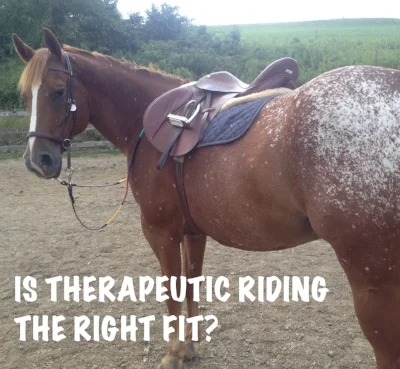
I've been asked many times by potential participants and parents, if therapeutic riding is the right fit for them or their child. I thought I'd take this chance to explain some variables that disqualify participants and, more importantly, qualities that make them a great match for therapeutic riding.
Precautions and Contraindications
Based on a compilation of databases, PATH Intl. puts together a list of conditions that present "precautions" and "contraindications" to equine activities. In other words, these are conditions that may need special attention or awareness for riders to participate, or in some cases would indicate a rider unsuitable for equine activity. These are compared with the physician's statement - which is required for each participant. Based on the medical professional's information, and the relevant precautions and contraindications, the instructor can make an educated decision for the participant. You might think these guidelines limit a participants eligibility, but it's quite the opposite. Because of these written guidelines, instructors are able to take into consideration conditions that may become a concern and make accommodations accordingly, rather than dismissing a rider because of lack of knowledge on the disability.
Accommodations
With the precautions and contraindications in mind, a PATH Intl. Certified Therapeutic Riding Instructor can make the proper adjustments to suit many riders. You would be surprised by the challenges that we can overcome in a lesson. Scared or squirming participants are no match for the smiling faces of our instructor and volunteers. Therapeutic riding is an adaptable and creative industry that thrives on diversity and new challenges. We are excited to find new ways to help each rider overcome their individual obstacles in life, in a safe and fun environment. We welcome all types of personalities, interests, and abilities at our center.
Alternatives
While we make every effort to accommodate all types of individuals, sometimes therapeutic riding is simply not the right fit. This could be based on weight, age, or severity of medical conditions. In cases like this, we might suggest an alternative form of equine activity, such as Equine Assisted Learning (EAL) that involves unmounted horsemanship activities.
The best way to find out if you, or someone you know, is a viable candidate for therapeutic riding, is to contact us! We will be happy to meet and evaluate the options together.
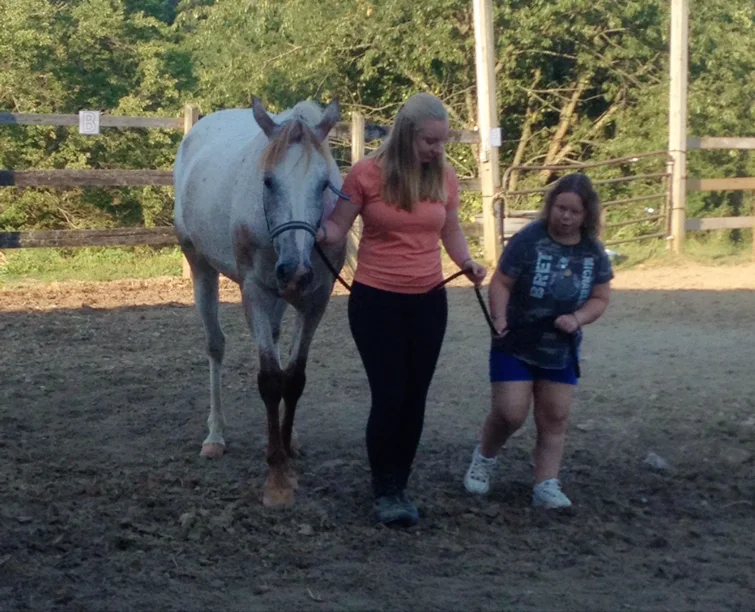
The Science Behind Equine Assisted Activities and Therapies
These studies show exciting and promising evidence for the EAAT industry. As more research stands behind it, EAAT becomes a stronger and more viable field.

I'm a strong advocate of the benefits of therapeutic riding and having the research to support its effects makes it even more powerful as an industry. While there are many more studies published than the ones I’m going to talk about, here are a few that show improvements in a few major populations that are served in the therapeutic riding industry.
ADHD is one of the most prevalent disorders in school-aged children and is characterized by age-inapprapriate focus and impulsiveness, as well as decreased motor coordination. A study was completed on 22 individuals diagnosed with ADHD. They underwent 12 weeks of Equine-Assisted Activities and Therapies (EAAT) sessions and their progress was measured based on nationally recognized methods of quantifying ADHD characteristics. After the study, it was found that there was a significant improvement in inattentive and hyperactive behaviors. There was also a significant improvement in manual dexterity and manual coordination within these individuals.
Another diagnosis that is seen often in the therapeutic riding community is autism spectrum disorder (ASD). This neurodevelopmental disorder is often accompanied by social interaction deficits, obsessive behaviors and interests, and motor planning difficulties. 6 months of lessons were given to 25 individuals. Each lesson included mounted and unmounted portions, and progress was measured over time. At the conclusion of the study, it was found that there was significant improvement in socialization skills, motor abilities, and executive functioning, further supporting the use of EAAT as an effective intervention in ASD.
The third and final diagnoses that I am going to focus on are anxiety and Post-Traumatic Stress Disorder (PTSD). Both of these psychological issues share a high degree of emotional distress. A 6 week EAAT program was designed for the participants that involved unmounted activities focusing on the coping of stressful and challenging situations. After the study, improvement was found in PTSD symptoms, emotional distress, alcohol use, and anxiety.
These studies show exciting and promising evidence for the EAAT industry. As more research stands behind it, EAAT becomes a stronger and more viable field.
Resources
Borgi, M., Loliva, D., Cerino, S., Chiarotti, F., Venerosi, A., Bramini, M., … Cirulli, F. (2016). Effectiveness of a Standardized Equine-Assisted Therapy Program for Children with Autism Spectrum Disorder. Journal of Autism and Developmental Disorders, 46(1), 1–9. https://doi.org/10.1007/s10803-015-2530-6
Jang, B., Song, J., Kim, J., Kim, S., Lee, J., Shin, H.-Y., … Joung, Y.-S. (2015). Equine-Assisted Activities and Therapy for Treating Children with Attention-Deficit/Hyperactivity Disorder. Journal of Alternative and Complementary Medicine (New York, N.Y.), 21(9), 546–553. https://doi.org/10.1089/acm.2015.0067
Polusny, M. A., Ries, B. J., Schultz, J. R., Calhoun, P., Clemensen, L., & Johnsen, I. R. (2008). Equine-Assisted Therapy for Anxiety and Posttraumatic Stress Symptoms. Journal of Traumatic Stress, 21(1), 75–82. https://doi.org/10.1002/jts.
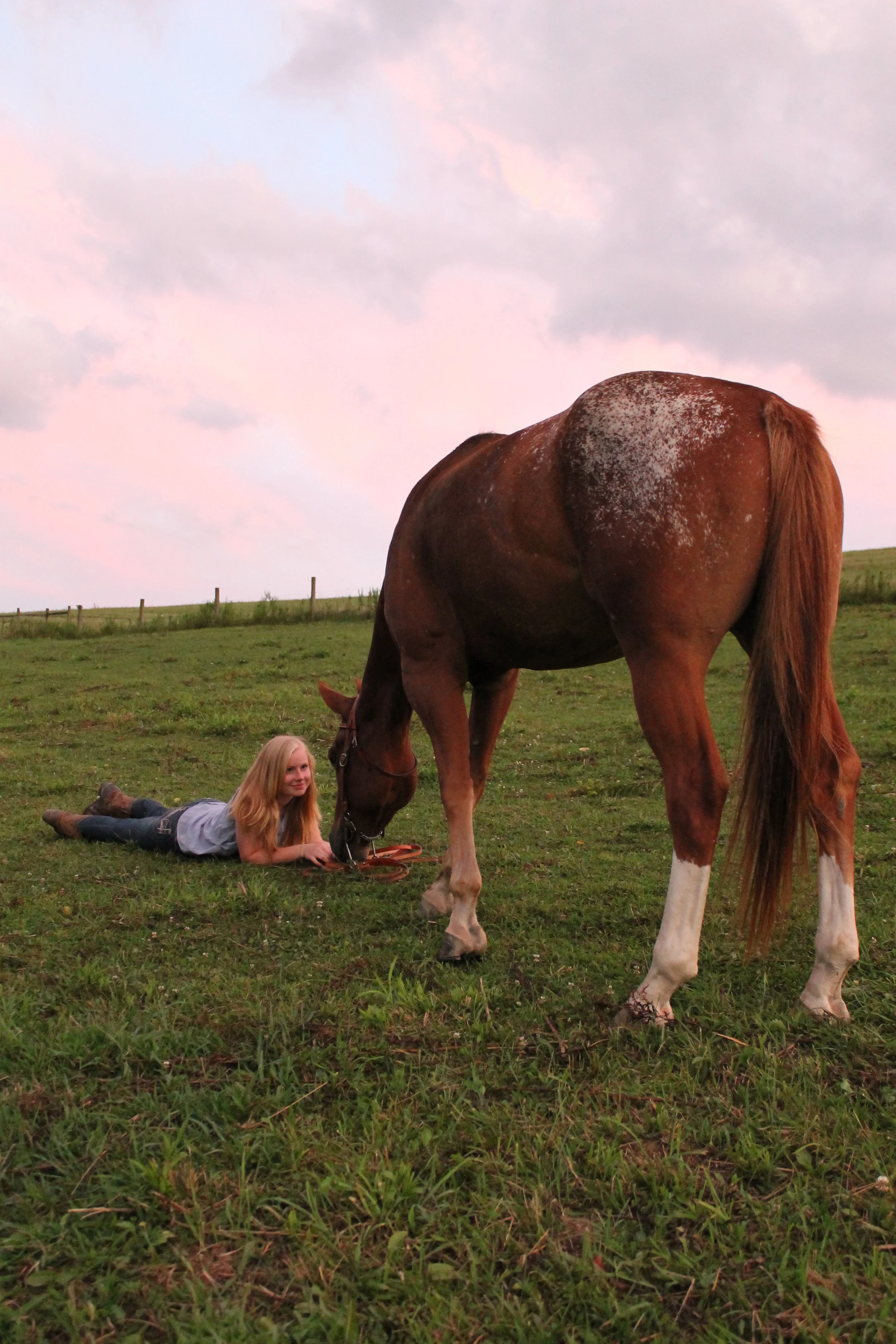
What Makes the Horse Such a Powerful Tool?
Therapeutic riding is much more than just a sport. It is a chance for a brighter future.

If you talk to a horse lover, they'll tell you that there's something special about horses that fills their heart in a way that nothing else can. While that's good and true, there is much more about horses that makes them excellent candidates for improving the challenges of our riders.
Physically
The three dimensional movement of the horse replicates the gait of the human walk. This amazing trait allows individuals to strengthen and maintain core and leg muscles that are necessary for walking. For those who are unable to utilize walking to strengthen those muscles, this is a way to exercise the core muscles and can even serve as a stepping stone to walking. The smooth rhythmic movement of the horse can also provide passive stretching of tight muscles. This can effectively improve range of motion, as well as overall mobility. Many body systems are also stimulated by the horse's movement, including the circulatory and vestibular systems. This allows individuals to improve their awareness of their position in space, balance, and overall cardiac health.
Cognitively
Therapeutic riding involves a multitude of activities that improve the cognitive well being of our riders. Motor planning activities are found in nearly every riding lesson in some form or another. Here, riders are able to practice their ability to incorporate various inputs and respond appropriately. Lessons also give riders the opportunity to utilize and improve their visual, auditory, and kinesthetic processing abilities as they learn the art of riding.
Socially
Therapeutic riding fosters a relationship between horse and human that necessitates a high level of respect and communication from both parties. Creating this strong bond with such a powerful animal builds self esteem and confidence in our riders. They also learn how to face challenges and overcome them with the support of their horse, volunteers, and instructor. Creating these healthy relationships often sets a precedent of creating more healthy relationships in their everyday lives.
Therapeutic riding is much more than just a sport. It is a chance for a brighter future. The multi-faceted horse provides a world of possibilities for anyone working towards an improved well being. The benefits of therapeutic riding are endless.

How Can You Make an Impact?
The entire experience, from horses… to riders… to other volunteers and staff, has a therapeutic quality that can’t be matched in any other setting. There is a place for everyone at our center if you just reach out and look for it.

Volunteers are the backbone of the therapeutic riding industry. Without them, many of our programs would not only be difficult, but impossible. So, what do the volunteers do at a therapeutic riding center?
Lesson Volunteers
One of the biggest roles of volunteers is in the therapeutic riding lessons. Many riders need some sort of assistance, whether it be a person to lead their horse, support their position on the horse as a side walker, or interact with the rider in lesson activities. Volunteers can enrich the experience of the rider in ways that wouldn’t be possible without them.
Facility Volunteers
In addition to lessons, volunteers are also important in nearly every other capacity of the center. Barn and horse maintenance are large and important daily activities of a center. The more hands to help clean a stall or groom a horse, the more smoothly and efficiently the animals can be taken care of. The health and safety of the horses are a main priority of our center, and helping to sustain such a vital piece of the program is a success in itself. An endless list can be added to these two main volunteer opportunities, that can suit any time frame, age, or ability.
Take Away Message...
When I volunteer at a therapeutic riding center, I always feel like I’m getting just as much out of the experience, if not more, than the people I am helping. The wide array of personalities and talents that you witness and engage with each day are amazing and eye opening. The entire experience, from horses… to riders… to other volunteers and staff, has a therapeutic quality that can’t be matched in any other setting. If anything, I hope this blog will encourage at least one person to volunteer and experience for themself just how amazing this industry can be for all parties involved. There is a place for everyone at our center, if you just reach out and look for it.
**adapted from my previous blog "Volunteering - A Place for Everyone" at Chatham University Blog Sites

What Do Therapeutic Riding Lessons Look Like?
To understand how therapeutic riding lessons benefit riders, it's important to first understand what lessons might consist of.

To understand how therapeutic riding lessons benefit riders, it's important to first understand what lessons might consist of. While every lesson is individualized to each student's needs, there is a general format that is followed.
Warm up
A warm up is always the first part of the lesson. While it is equally important for each rider, it can look different for everyone. For example, an individual with hypertonic muscles, may need to participate in exercises on and off horseback that promote passive stretching of their lower body. An individual with attention difficulties may need more complex, mentally engaging warm up activities that help them become focused for the lesson. In all cases, the warm up is designed to help the rider to mentally and physically prepare for the upcoming riding skills.
Riding Skill
The riding skill is the main bulk of a therapeutic riding lesson. Here, the rider learns a skill that is complimentary to their overall goals. The instructor explains what, why, and how to perform the skill that they are learning that day. If a rider has the goal of improving balance, then they may learn how to maintain a centered seat when turning their horse. If a rider wants to improve their communication skills, they may learn how to verbally and/or non-verbally tell their horse how to walk on. There is an endless number riding skills that not only improve their abilities as an equestrian but also their skills in everyday life.
Practice
Practicing the new riding skill, and riding skills previously learned, gives the rider the opportunity to show what they've learned. Whether it be a pattern or a game that allows them to demonstrate their skills, they have a chance to put what they've learned into practice. The practice activity is also designed to allow room for progression if the rider is mastering the skill.
Cool Down
After a productive lesson, both the rider and horse need some time to cool down. During this time, the rider is given a chance to relax their body and review what they learned during their lesson. Using this time to solidify what they learned during their lesson often helps them build upon their riding skills in future lessons.
Grooming and Tacking/Untacking
Grooming and tacking horses can have many benefits of its own. It is often included in therapeutic riding lessons, but not always. The rider can create a closer bond with their horse, learn more about horses and their behaviors, and integrate multiple tactile surfaces.
Each lesson is under the instruction of a PATH Intl. Certified Therapeutic Riding Instructor. Various riding disciplines may be used in a lesson, and the equipment used in the riding area may change from lesson to lesson. Depending on each rider's skills, a horse leader and/or sidewalkers may be utilized to help control the horse and stabilize the rider.
read more...
-
Equine Assisted Learning
- Sep 19, 2017 What is Equine Assisted Learning?
- PATH Intl.
-
Therapeutic Riding
- Dec 18, 2019 Therapeutic Riding: An Adaptive Sport with Many Benefits
- Feb 1, 2018 What Shaped Me - A Note From our Instructor
- Oct 23, 2017 Instruction vs. Games
- Oct 12, 2017 Tracking Riders' Progress
- Sep 12, 2017 Group vs. Individual Therapeutic Riding Lessons
- Aug 29, 2017 The Difference Between Therapeutic Riding and Hippotherapy
- Aug 24, 2017 Is Therapeutic Riding the Right Fit?
- Aug 17, 2017 The Science Behind Equine Assisted Activities and Therapies
- Aug 9, 2017 What Makes the Horse Such a Powerful Tool?
- Jul 24, 2017 What Do Therapeutic Riding Lessons Look Like?
-
Volunteer
- Jul 31, 2017 How Can You Make an Impact?