

The Science Behind Equine Assisted Activities and Therapies
These studies show exciting and promising evidence for the EAAT industry. As more research stands behind it, EAAT becomes a stronger and more viable field.

I'm a strong advocate of the benefits of therapeutic riding and having the research to support its effects makes it even more powerful as an industry. While there are many more studies published than the ones I’m going to talk about, here are a few that show improvements in a few major populations that are served in the therapeutic riding industry.
ADHD is one of the most prevalent disorders in school-aged children and is characterized by age-inapprapriate focus and impulsiveness, as well as decreased motor coordination. A study was completed on 22 individuals diagnosed with ADHD. They underwent 12 weeks of Equine-Assisted Activities and Therapies (EAAT) sessions and their progress was measured based on nationally recognized methods of quantifying ADHD characteristics. After the study, it was found that there was a significant improvement in inattentive and hyperactive behaviors. There was also a significant improvement in manual dexterity and manual coordination within these individuals.
Another diagnosis that is seen often in the therapeutic riding community is autism spectrum disorder (ASD). This neurodevelopmental disorder is often accompanied by social interaction deficits, obsessive behaviors and interests, and motor planning difficulties. 6 months of lessons were given to 25 individuals. Each lesson included mounted and unmounted portions, and progress was measured over time. At the conclusion of the study, it was found that there was significant improvement in socialization skills, motor abilities, and executive functioning, further supporting the use of EAAT as an effective intervention in ASD.
The third and final diagnoses that I am going to focus on are anxiety and Post-Traumatic Stress Disorder (PTSD). Both of these psychological issues share a high degree of emotional distress. A 6 week EAAT program was designed for the participants that involved unmounted activities focusing on the coping of stressful and challenging situations. After the study, improvement was found in PTSD symptoms, emotional distress, alcohol use, and anxiety.
These studies show exciting and promising evidence for the EAAT industry. As more research stands behind it, EAAT becomes a stronger and more viable field.
Resources
Borgi, M., Loliva, D., Cerino, S., Chiarotti, F., Venerosi, A., Bramini, M., … Cirulli, F. (2016). Effectiveness of a Standardized Equine-Assisted Therapy Program for Children with Autism Spectrum Disorder. Journal of Autism and Developmental Disorders, 46(1), 1–9. https://doi.org/10.1007/s10803-015-2530-6
Jang, B., Song, J., Kim, J., Kim, S., Lee, J., Shin, H.-Y., … Joung, Y.-S. (2015). Equine-Assisted Activities and Therapy for Treating Children with Attention-Deficit/Hyperactivity Disorder. Journal of Alternative and Complementary Medicine (New York, N.Y.), 21(9), 546–553. https://doi.org/10.1089/acm.2015.0067
Polusny, M. A., Ries, B. J., Schultz, J. R., Calhoun, P., Clemensen, L., & Johnsen, I. R. (2008). Equine-Assisted Therapy for Anxiety and Posttraumatic Stress Symptoms. Journal of Traumatic Stress, 21(1), 75–82. https://doi.org/10.1002/jts.
What Makes the Horse Such a Powerful Tool?
Therapeutic riding is much more than just a sport. It is a chance for a brighter future.

If you talk to a horse lover, they'll tell you that there's something special about horses that fills their heart in a way that nothing else can. While that's good and true, there is much more about horses that makes them excellent candidates for improving the challenges of our riders.
Physically
The three dimensional movement of the horse replicates the gait of the human walk. This amazing trait allows individuals to strengthen and maintain core and leg muscles that are necessary for walking. For those who are unable to utilize walking to strengthen those muscles, this is a way to exercise the core muscles and can even serve as a stepping stone to walking. The smooth rhythmic movement of the horse can also provide passive stretching of tight muscles. This can effectively improve range of motion, as well as overall mobility. Many body systems are also stimulated by the horse's movement, including the circulatory and vestibular systems. This allows individuals to improve their awareness of their position in space, balance, and overall cardiac health.
Cognitively
Therapeutic riding involves a multitude of activities that improve the cognitive well being of our riders. Motor planning activities are found in nearly every riding lesson in some form or another. Here, riders are able to practice their ability to incorporate various inputs and respond appropriately. Lessons also give riders the opportunity to utilize and improve their visual, auditory, and kinesthetic processing abilities as they learn the art of riding.
Socially
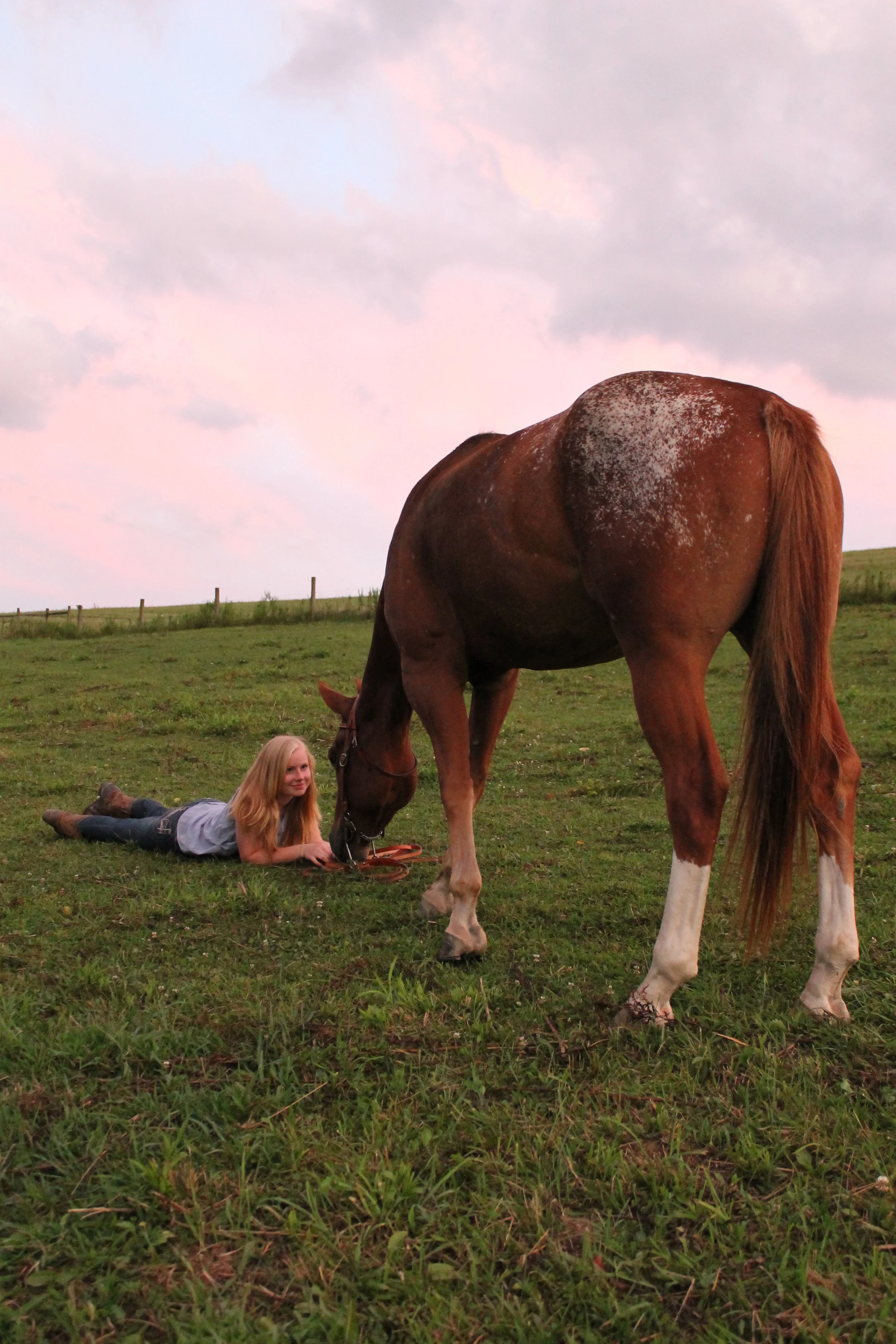
Therapeutic riding fosters a relationship between horse and human that necessitates a high level of respect and communication from both parties. Creating this strong bond with such a powerful animal builds self esteem and confidence in our riders. They also learn how to face challenges and overcome them with the support of their horse, volunteers, and instructor. Creating these healthy relationships often sets a precedent of creating more healthy relationships in their everyday lives.
Therapeutic riding is much more than just a sport. It is a chance for a brighter future. The multi-faceted horse provides a world of possibilities for anyone working towards an improved well being. The benefits of therapeutic riding are endless.

How Can You Make an Impact?
The entire experience, from horses… to riders… to other volunteers and staff, has a therapeutic quality that can’t be matched in any other setting. There is a place for everyone at our center if you just reach out and look for it.

Volunteers are the backbone of the therapeutic riding industry. Without them, many of our programs would not only be difficult, but impossible. So, what do the volunteers do at a therapeutic riding center?
Lesson Volunteers
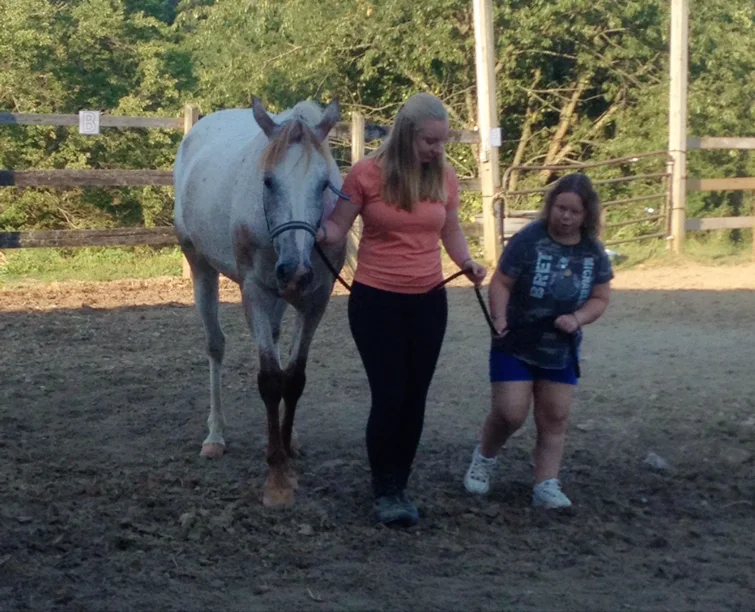
One of the biggest roles of volunteers is in the therapeutic riding lessons. Many riders need some sort of assistance, whether it be a person to lead their horse, support their position on the horse as a side walker, or interact with the rider in lesson activities. Volunteers can enrich the experience of the rider in ways that wouldn’t be possible without them.
Facility Volunteers
In addition to lessons, volunteers are also important in nearly every other capacity of the center. Barn and horse maintenance are large and important daily activities of a center. The more hands to help clean a stall or groom a horse, the more smoothly and efficiently the animals can be taken care of. The health and safety of the horses are a main priority of our center, and helping to sustain such a vital piece of the program is a success in itself. An endless list can be added to these two main volunteer opportunities, that can suit any time frame, age, or ability.
Take Away Message...
When I volunteer at a therapeutic riding center, I always feel like I’m getting just as much out of the experience, if not more, than the people I am helping. The wide array of personalities and talents that you witness and engage with each day are amazing and eye opening. The entire experience, from horses… to riders… to other volunteers and staff, has a therapeutic quality that can’t be matched in any other setting. If anything, I hope this blog will encourage at least one person to volunteer and experience for themself just how amazing this industry can be for all parties involved. There is a place for everyone at our center, if you just reach out and look for it.
**adapted from my previous blog "Volunteering - A Place for Everyone" at Chatham University Blog Sites

What Do Therapeutic Riding Lessons Look Like?
To understand how therapeutic riding lessons benefit riders, it's important to first understand what lessons might consist of.

To understand how therapeutic riding lessons benefit riders, it's important to first understand what lessons might consist of. While every lesson is individualized to each student's needs, there is a general format that is followed.
Warm up
A warm up is always the first part of the lesson. While it is equally important for each rider, it can look different for everyone. For example, an individual with hypertonic muscles, may need to participate in exercises on and off horseback that promote passive stretching of their lower body. An individual with attention difficulties may need more complex, mentally engaging warm up activities that help them become focused for the lesson. In all cases, the warm up is designed to help the rider to mentally and physically prepare for the upcoming riding skills.
Riding Skill
The riding skill is the main bulk of a therapeutic riding lesson. Here, the rider learns a skill that is complimentary to their overall goals. The instructor explains what, why, and how to perform the skill that they are learning that day. If a rider has the goal of improving balance, then they may learn how to maintain a centered seat when turning their horse. If a rider wants to improve their communication skills, they may learn how to verbally and/or non-verbally tell their horse how to walk on. There is an endless number riding skills that not only improve their abilities as an equestrian but also their skills in everyday life.
Practice
Practicing the new riding skill, and riding skills previously learned, gives the rider the opportunity to show what they've learned. Whether it be a pattern or a game that allows them to demonstrate their skills, they have a chance to put what they've learned into practice. The practice activity is also designed to allow room for progression if the rider is mastering the skill.
Cool Down
After a productive lesson, both the rider and horse need some time to cool down. During this time, the rider is given a chance to relax their body and review what they learned during their lesson. Using this time to solidify what they learned during their lesson often helps them build upon their riding skills in future lessons.
Grooming and Tacking/Untacking
Grooming and tacking horses can have many benefits of its own. It is often included in therapeutic riding lessons, but not always. The rider can create a closer bond with their horse, learn more about horses and their behaviors, and integrate multiple tactile surfaces.
Each lesson is under the instruction of a PATH Intl. Certified Therapeutic Riding Instructor. Various riding disciplines may be used in a lesson, and the equipment used in the riding area may change from lesson to lesson. Depending on each rider's skills, a horse leader and/or sidewalkers may be utilized to help control the horse and stabilize the rider.
read more...
-
Equine Assisted Learning
- Sep 19, 2017 What is Equine Assisted Learning?
- PATH Intl.
-
Therapeutic Riding
- Dec 18, 2019 Therapeutic Riding: An Adaptive Sport with Many Benefits
- Feb 1, 2018 What Shaped Me - A Note From our Instructor
- Oct 23, 2017 Instruction vs. Games
- Oct 12, 2017 Tracking Riders' Progress
- Sep 12, 2017 Group vs. Individual Therapeutic Riding Lessons
- Aug 29, 2017 The Difference Between Therapeutic Riding and Hippotherapy
- Aug 24, 2017 Is Therapeutic Riding the Right Fit?
- Aug 17, 2017 The Science Behind Equine Assisted Activities and Therapies
- Aug 9, 2017 What Makes the Horse Such a Powerful Tool?
- Jul 24, 2017 What Do Therapeutic Riding Lessons Look Like?
-
Volunteer
- Jul 31, 2017 How Can You Make an Impact?